By Age
Preschool is a foundational stage for cognitive development and language acquisition. During the ages of 3 to 5, children rapidly develop listening skills, vocabulary, and early reading awareness. The best educational toys for preschoolers are designed to stimulate curiosity while helping children build the early literacy skills they will need in kindergarten and primary school.
Quick Tip: The best electronic learning toys for preschoolers focus on sensory engagement and screen-free interaction. Tools like smart reading pens bridge the gap between physical books and digital audio, enhancing phonetic awareness and vocabulary without eye strain.
This page explores how electronic learning toys for preschoolers can support language learning and cognitive development. Interactive tools such as smart reading pens allow children to explore books, sounds, and words in a playful and engaging way. By simply touching words or pictures with a reading pen, preschoolers can hear pronunciation, repeat new vocabulary, and connect spoken language with printed text.
Unlike passive entertainment devices, modern educational technology focuses on active participation and discovery-based learning. When children interact with educational content through sound and touch, they develop stronger memory retention and language comprehension.
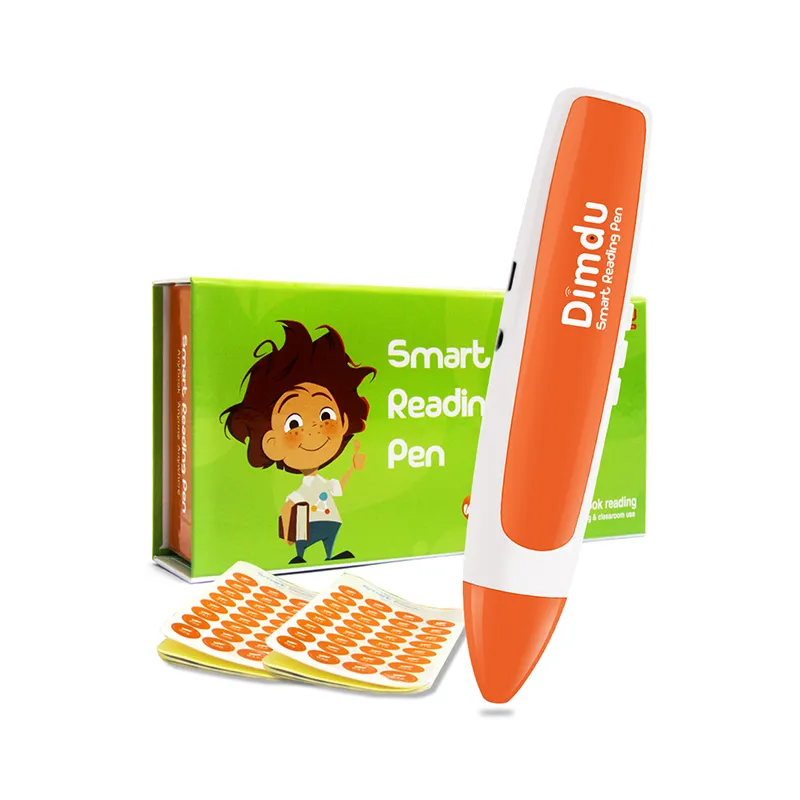
Smart learning tools like the Dimdu reading pen combine traditional books with interactive audio technology. This approach helps preschoolers build confidence, expand their vocabulary, and develop early reading awareness before they enter kindergarten.
In today's digital environment, many young children spend significant time using tablets or smartphones. While these devices can provide educational content, excessive screen exposure raises concerns for many parents, especially regarding eye health and attention development.
One of the biggest reasons parents look for alternative learning tools is eye protection. Long periods of screen time can lead to visual fatigue and reduce the amount of time children spend interacting with physical learning materials such as books and flashcards.
Screen-free educational tools provide a healthier learning experience. Instead of staring at a bright screen, children interact with physical books, cards, and objects while still benefiting from audio learning support.
Interactive reading pens offer an effective balance between technology and traditional learning materials. The child simply taps the pen on printed content to hear words, sounds, or explanations. This creates an engaging learning experience without requiring a screen.
For preschoolers, this approach has several advantages:
It protects young eyes from prolonged screen exposure.
It encourages hands-on interaction with books and learning materials.
It supports active listening and pronunciation practice.
It keeps children focused on learning rather than digital entertainment.
Because of these benefits, many parents and educators consider reading pens one of the most effective screen-free electronic learning toys for preschoolers.
Alphabet learning is one of the most important milestones during the preschool years. Children begin recognizing letters, connecting letters with sounds, and forming the building blocks of early reading.
The best alphabet toys for preschoolers help children associate letters with sounds and words in a natural and engaging way. Traditional alphabet cards and picture books are helpful, but interactive tools can significantly enhance the learning experience.
When a reading pen is combined with alphabet cards or alphabet books, children receive immediate audio feedback. By tapping a letter or a word, the pen can pronounce the sound clearly. This helps children build strong phonetic awareness and improves their ability to recognize letters.
For example, when a child taps the letter "B", the pen can say the letter name, the phonetic sound, and example words such as "ball" or "bear". This multi-sensory approach helps children remember information more effectively than passive learning.
Interactive alphabet learning also encourages repetition. Preschoolers naturally enjoy tapping objects repeatedly, and each interaction reinforces their understanding of letter sounds and vocabulary.
Using a reading pen with alphabet cards, vocabulary flashcards, and picture books transforms simple learning materials into an interactive language experience. As a result, children develop stronger listening skills, clearer pronunciation, and improved alphabet recognition.
An educational toy for preschoolers should support key areas of early childhood development. For children between the ages of 3 and 5, the most important learning areas include language development, vocabulary expansion, listening skills, and early literacy awareness.
A toy becomes truly educational when it encourages active participation rather than passive observation. Toys that allow children to interact, explore, repeat sounds, or solve simple problems help strengthen cognitive development.
The best educational toys for preschoolers often combine multiple learning elements, such as sound, touch, and visual interaction. This multi-sensory approach helps children retain information and stay engaged during learning activities.
Yes, the Dimdu reading pen is designed with young children in mind and is suitable for preschool learning environments.
The device is built with durable materials and simple controls so that young learners can easily use it without frustration. The design focuses on safe interaction, allowing children to tap books and learning cards to hear audio feedback.
Because the reading pen works with printed materials instead of screens, it also reduces the amount of screen exposure for young children. This makes it a practical option for parents who want to support learning while protecting their child's eye health.
The intuitive design encourages independent exploration while remaining safe and easy for preschoolers to handle.
A smart reading pen helps preschoolers recognize the alphabet by connecting letters, sounds, and words in an interactive way.
When a child taps a letter with the reading pen, the device can pronounce the letter name and its phonetic sound. This immediate audio feedback helps children understand how letters relate to spoken language.
Repeated interaction strengthens memory. Every time the child taps a letter or word, they hear the correct pronunciation again. Over time, this repetition helps children recognize letters faster and connect them with their corresponding sounds.
In addition, smart pens often work with alphabet cards and picture books. This allows children to learn letters within meaningful contexts, which makes language learning more natural and effective.
By combining touch, sound, and visual recognition, smart reading pens provide a powerful tool for developing early alphabet skills.







 Add to Cart