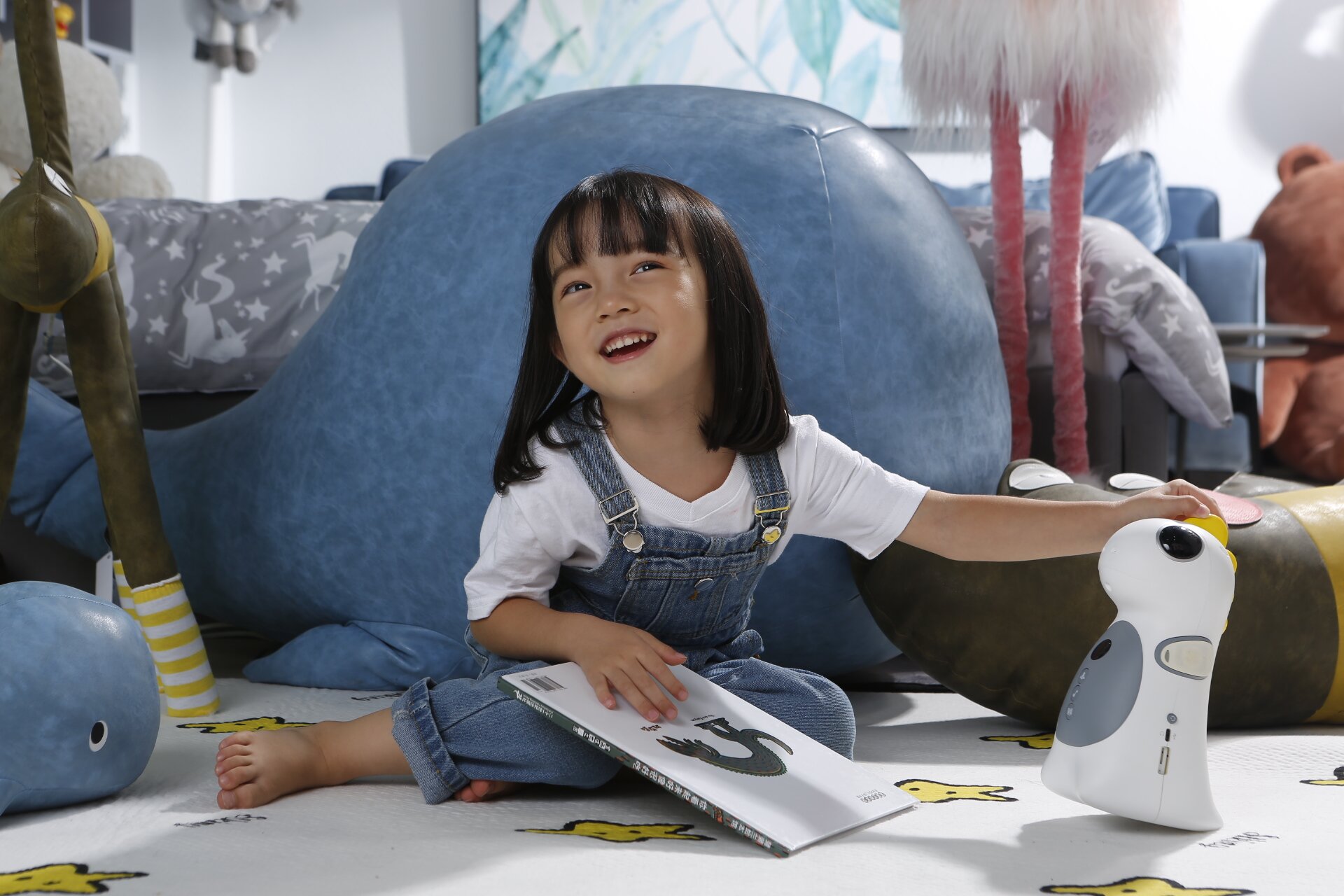
Preschoolers (ages 3–6) are at a golden stage for language development. Their brains absorb new words rapidly, but keeping them engaged without screens can be challenging. A kids reading pen (also called a smart talking pen or point-reading pen) changes that by turning everyday books into interactive, multisensory experiences.
With a simple point-and-read action, children instantly hear words, sentences, sounds, or songs. This hands-on approach builds vocabulary, improves pronunciation, strengthens listening skills, and — most importantly — boosts confidence as kids feel like successful “readers” on their own.
The Dimdu smart reading pen is especially effective for home use. It features child-safe BPA-free ABS plastic, ergonomic design for small hands, fast OID 3.0 recognition with Sonix chipset (sub-0.1s response), long-lasting high-density lithium battery with Type-C charging, and large customizable memory (4GB–32GB). Parents can personalize learning with over 800 reusable recordable stickers to add family voices or custom words.Here are 10 fun, easy-to-do home activities that use a kids reading pen to supercharge vocabulary and self-confidence in preschoolers. All activities work with standard OID-compatible storybooks or recordable stickers added to favorite books.
1. Word Treasure Hunt
Scatter 8–10 familiar objects or picture cards around the room. Have your child use the pen to “read” the matching word on a prepared sheet or book page. When they point correctly and hear the word, they “collect” the object.
Benefits: Reinforces word-object association and builds excitement through movement.
Vocabulary boost: Everyday nouns and adjectives.
2. Animal Sound Safari
Use an animal-themed storybook. Let your preschooler point the pen at different animals to hear names and realistic sounds. Then encourage them to imitate the sound and repeat the word.
Benefits: Combines auditory input with imitation for better retention.
Confidence builder: Kids love making loud animal noises — they feel like experts!
3. My Family Story Time
Apply recordable stickers to photos of family members or draw simple family pictures. Record each person’s name, a short message, or a fun fact in your own voice. Let your child “read” the family book independently.
Benefits: Personalization makes learning meaningful.
Emotional win: Hearing “Mommy says I am brave!” increases self-confidence.
4. Color and Shape Matching Game
Prepare pages with colored shapes or use a dedicated early learning book. Child points to a shape/color, hears its name, then finds a matching real object in the house (red ball, blue block, etc.).
Benefits: Multisensory linking of visual, auditory, and tactile learning.
Vocabulary boost: Colors, shapes, and descriptive words.
5. Repeat-After-Me Rhymes and Songs
Choose books with nursery rhymes or simple songs. Play a line with the pen, pause, and have your child repeat it. Gradually let them lead by pointing themselves.
Benefits: Improves rhythm, phonemic awareness, and memory through repetition.
Confidence: Mastering a full rhyme makes kids beam with pride.
6. “What’s Next?” Story Prediction
Read a familiar story together using the pen. At key points, pause and ask, “What do you think happens next?” Then point to the next part to reveal the answer.
Benefits: Develops comprehension and critical thinking alongside vocabulary.
Engagement: Turns passive listening into active storytelling.
7. Daily Routine Vocabulary Builder
Create or use a book about daily routines (brushing teeth, eating breakfast, bedtime). Point to each activity and hear the words. Act it out together after “reading.”
Benefits: Connects new words directly to real-life experiences.
Independence: Kids gain confidence describing their own day.
8. Emotion Explorer
Use books showing faces with different emotions. Point to each face to hear the emotion word (“happy,” “sad,” “surprised”). Ask your child to make the face and share a time they felt that way.
Benefits: Builds emotional vocabulary and empathy.
Social-emotional growth: Helps preschoolers express feelings confidently.
9. Counting and Number Adventure
Point the pen at numbers or counting pages. After hearing the number and counting words, count real objects together (toys, snacks, steps).
Benefits: Combines literacy with early math concepts.
Confidence boost: Successfully counting along with the pen feels like a big achievement.
10. Create Your Own Talking Storybook
Start with blank or simple pages and add recordable stickers. Together with your child, invent a short story about their favorite toy or pet. Record each part in your voice or theirs (with help). Then let them “read” their own book proudly.
Benefits: Sparks creativity and ownership of learning.
Ultimate confidence builder: “I made this book and I can read it!”Comparison of Activity Benefits
| Activity | Main Vocabulary Focus | Confidence Building Aspect | Time Required | Best Age Range | Key Dimdu Feature Used |
| 1. Word Treasure Hunt | Nouns & Adjectives | Movement + instant success | 10-15 min | 3-5 | Fast OID pointing accuracy |
| 2. Animal Sound Safari | Animal names & sounds | Imitation & loud fun | 10 min | 3-6 | High-fidelity speaker |
| 3. My Family Story Time | Family-related words | Personal voice & emotional connection | 15 min | 3-6 | Recordable stickers (800+) |
| 4. Color & Shape Matching | Colors, shapes, descriptors | Matching real objects | 10-12 min | 3-5 | Precise point-and-read |
| 5. Repeat-After-Me Rhymes | Rhymes & phonics | Mastering full rhymes | 10-15 min | 4-6 | Repeat playback |
| 6. What’s Next? Prediction | Story words & sequencing | Active storytelling | 15 min | 4-6 | Clear narration |
| 7. Daily Routine Builder | Routine verbs & nouns | Describing own day | 12 min | 3-6 | Custom recording |
| 8. Emotion Explorer | Emotion words | Expressing feelings | 10 min | 4-6 | Emotional audio cues |
| 9. Counting Adventure | Numbers & counting words | Successful counting | 10 min | 3-6 | Memory for multiple pages |
| 10. Create Your Own Book | Creative & personal words | Ownership of their own story | 20 min | 4-6 | Recordable stickers |
This table helps parents quickly choose activities based on their child’s current needs and the pen’s strengths, such as fast recognition and personalized recording.
Frequently Asked Questions (FAQ)
Q: How does a kids reading pen help build vocabulary in preschoolers?
A: The pen provides instant, clear audio feedback when a child points to a word or picture. This repeated listening helps children associate sounds with meanings, improve pronunciation, and expand their word bank through multisensory (see + hear + touch) learning. Many parents notice noticeable vocabulary growth within weeks of regular use.
Q: Can I use the Dimdu smart reading pen for personalized activities at home?
A: Yes! With over 800 reusable recordable stickers, you can easily add your own voice, family messages, or custom words to any book or homemade pages. This makes activities like “My Family Story Time” or “Create Your Own Talking Storybook” highly effective and emotionally engaging.
Q: Is the Dimdu pen safe and easy for preschoolers to use?
A: Absolutely. It is made of eco-friendly BPA-free ABS plastic, drop-tested for durability, lightweight (about 0.2kg), and ergonomically designed for small hands. It meets CE and RoHS standards and is recommended for ages 3+. The fast OID 3.0 technology with Sonix chipset ensures accurate, frustration-free pointing.
Q: How long does the battery last during daily home activities?
A: The high-density lithium battery supports extended play sessions. With Type-C charging, it easily lasts through multiple 10–20 minute activities per day without frequent recharging, making it convenient for busy families.
Q: Do I need special books for these activities?
A: You can start with any OID-compatible talking pen books. For maximum flexibility, use the recordable stickers on your child’s existing favorite books. This allows you to turn ordinary storybooks into interactive tools for vocabulary and confidence-building activities.
Q: Will using a talking pen replace parent-child reading time?
A: No — it enhances it! The pen encourages independent exploration while you can still sit together, discuss what you hear, and add your own input. It actually makes shared reading more interactive and fun.For more detailed answers about setup, book compatibility, or troubleshooting, visit our Talking Pen FAQ page.If your child needs extra support with reading, explore how talking pens help in our guide: The 5 Best Reading Pens for Dyslexia in 2026.
Ready to Start These Activities?
The Dimdu smart reading pen turns ordinary home time into powerful learning moments that build both vocabulary and lasting confidence — all while staying completely screen-free.
Discover the full features and options here: Dimdu Smart Reading Pen – Perfect for Preschoolers
Which activity are you most excited to try first with your child? Share in the comments below — we love hearing real parent stories!